Reviewed by Roshan Sharma, Harika Bagh (events and venue selection).
The question of the total destination wedding cost in Jaipur is often met with vague answers like “it depends.” While technically true, those answers are unhelpful for a couple mapping out their financial future. Planning a wedding in the Pink City is an exercise in balancing royal aspirations with fiscal reality. Most online resources gloss over granular details like the 18% GST or “vendor royalty fees” that appear on the final bill.
This guide is designed for radical transparency. We understand that a wedding is a significant investment. Using our “Reality Check” methodology, we provide a component-by-component breakdown of exactly what you will spend. Whether you are planning a destination wedding in Jaipur or just starting venue research, this guide provides the numbers you need.
Our “Reality Check” Methodology: Calculating Wedding ROI
Most couples look only at venue and catering prices. Our “Reality Check” methodology suggests these are only two pillars of the final ROI. Return on Investment in a wedding context is defined as the maximum guest experience and aesthetic impact achieved per rupee spent. To truly understand the destination wedding cost in Jaipur, we evaluate the budget through five distinct lenses.
1. Venue Buyout vs. Room Blocks
A room block is a reservation of rooms, but a buyout ensures 100% privacy, which is essential for that coveted “royal” feeling. Palaces charge a massive premium for this exclusivity. You must factor in venue rental, base tariffs, and minimum guarantee (MG) requirements. Right-sizing your venue is the first rule of fiscal transparency. If you have 150 guests, booking a 250-room hotel will result in a poor ROI as you will be paying for unused inventory.
2. The F&B Scale: Beyond the “Per Plate”
The “per plate” charge typically covers only one meal. In a destination wedding, you are responsible for the guest’s entire culinary journey. This includes breakfast, lunch, high tea, the main wedding dinner, and the popular midnight snacks. Choosing a venue with a strong in-house culinary team is a major cost-saver as it eliminates expensive outside catering equipment rentals and staff travel costs.
3. Production Value: The 15-20% Rule
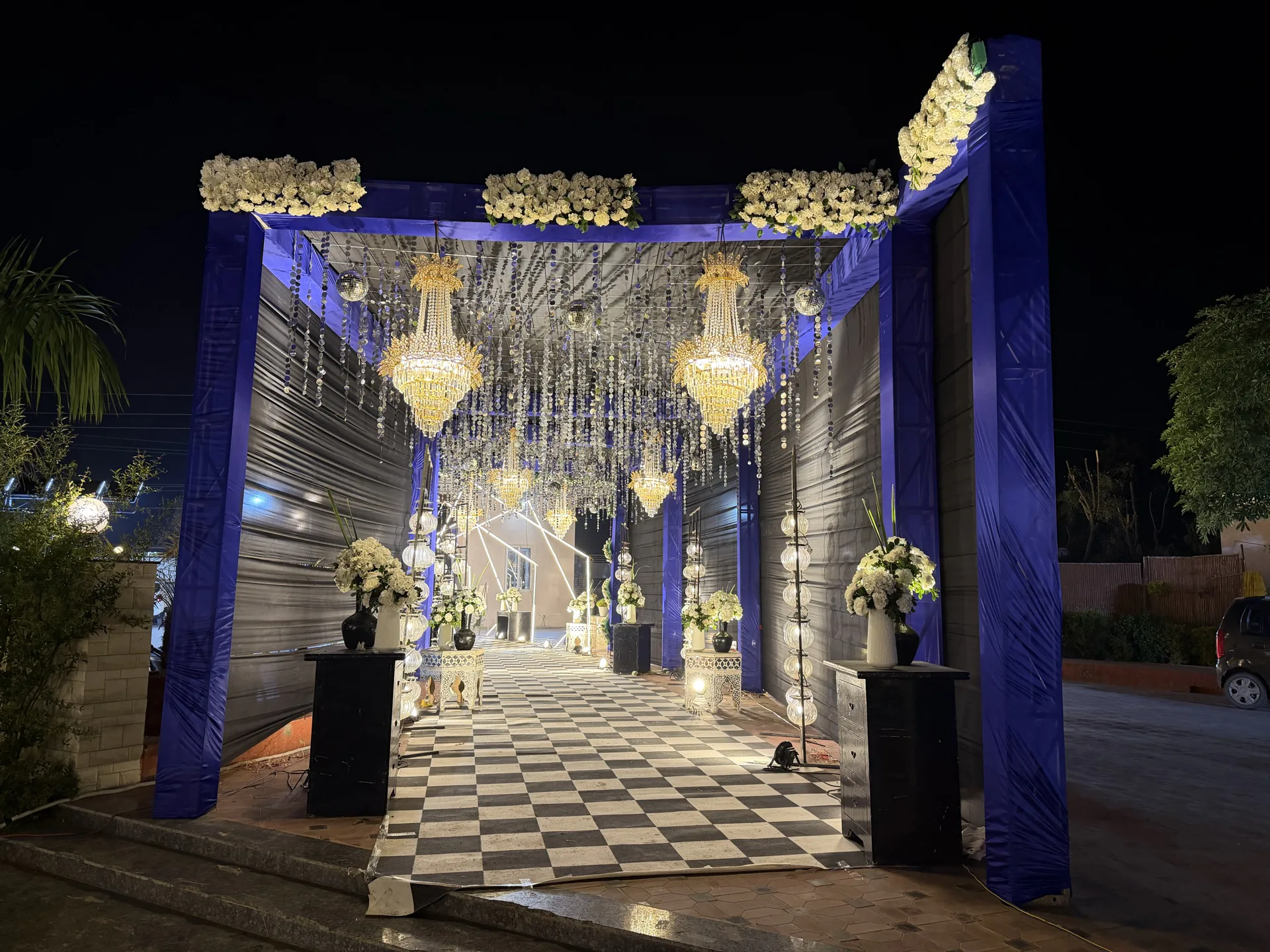
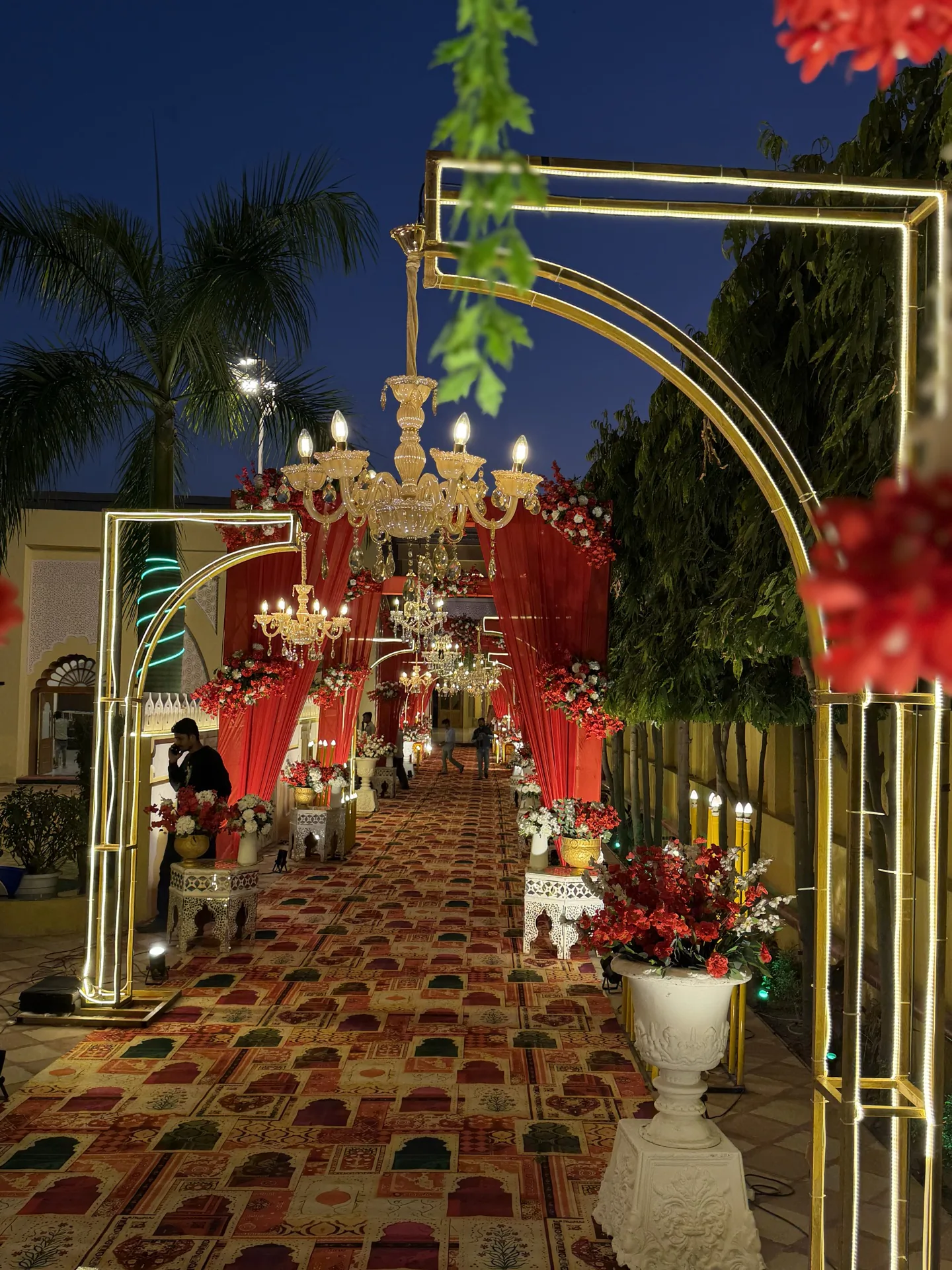
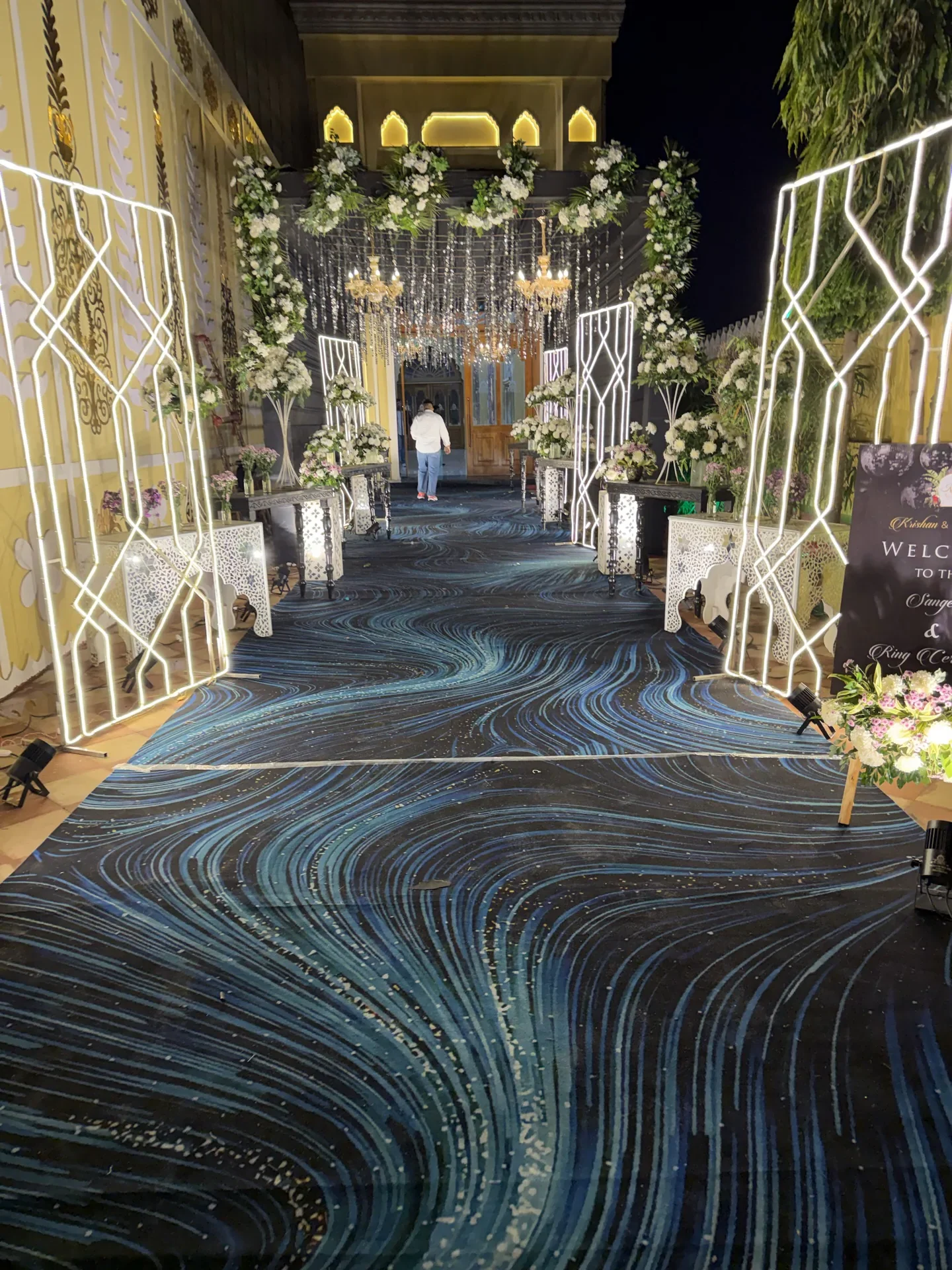
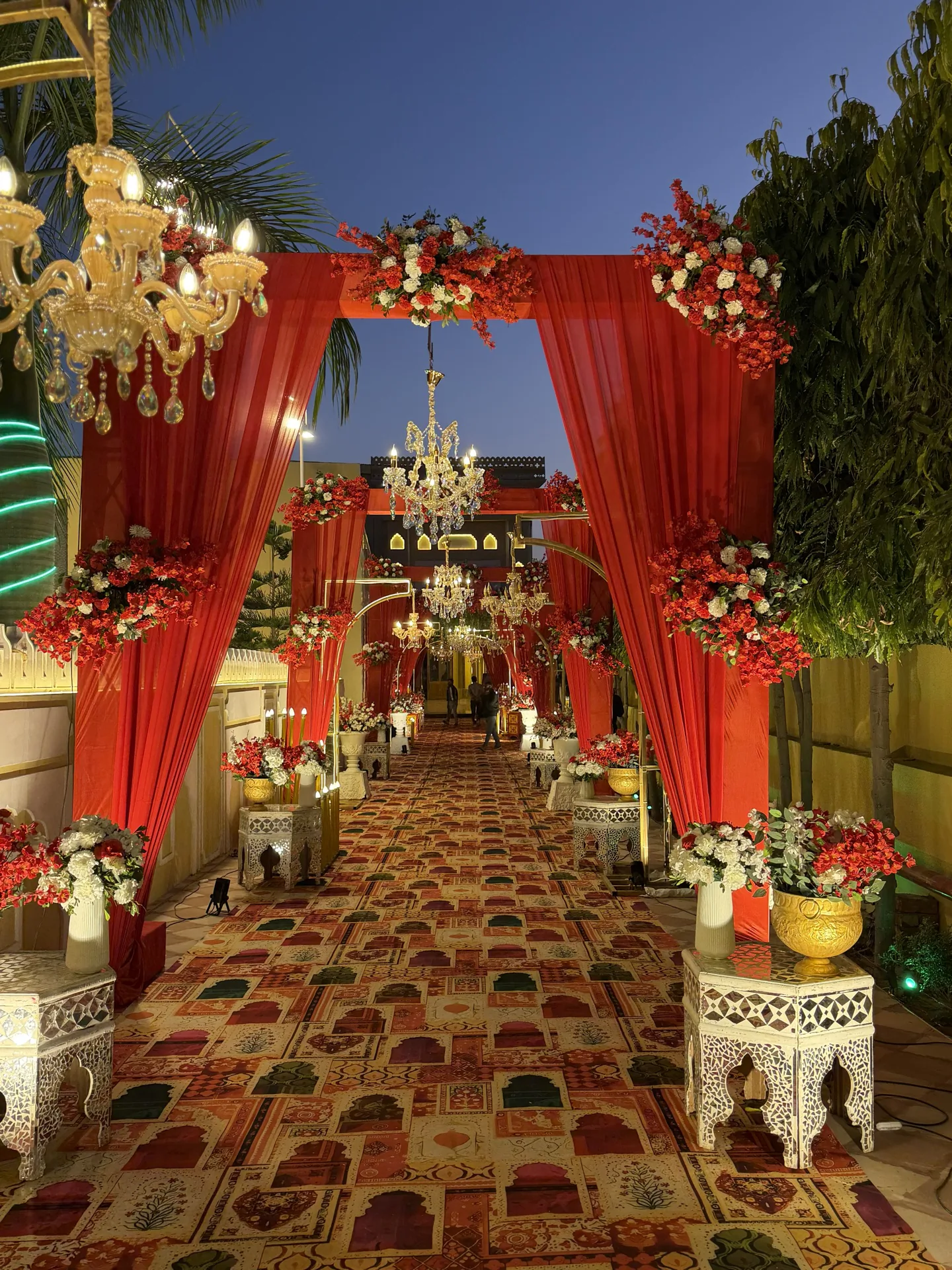
Production includes decor, sound, light, and stage setups. Even the most beautiful palace needs professional lighting for photography and videography. As a rule of thumb, production should account for 15% to 20% of your total budget. At venues like Harika Bagh, the heritage architecture provides a natural backdrop that requires significantly less floral decor compared to a sterile hotel ballroom, drastically improving your ROI.
4. Statutory Burden: GST and Licensing
Luxury hotel stays and professional catering are subject to 18% GST. Rajasthan also requires P-10 liquor licenses for every day alcohol is served. Additionally, performance rights (IPRS and PPL) are required for copyrighted music. Ignoring these statutory costs can lead to a 15% budget overrun that catches most couples by surprise.
5. Logistics: Transport and Hospitality
This includes airport transfers, local shuttles between satellite hotels, hospitality desks for guest queries, and welcome hampers. A destination wedding is a vacation for your guests, and the logistics must reflect that care. While seemingly small, these costs aggregate quickly and must be part of the initial “Reality Check.”
Total Budget Estimates by Luxury Tier (150 Guests)
To help you align your vision with your bank account, we have broken down the Jaipur market into three distinct financial tiers. These estimates are based on a 2-night celebration for 150 guests, which is the most common size for a Pink City destination wedding. It is important to note that these figures are comprehensive—they include stay, food, decor, and basic logistics.
Tier 1: Ultra-Royal (₹1.5Cr – ₹3Cr+)
This tier is reserved for iconic palace buyouts like Rambagh Palace, Fairmont Jaipur, or The Leela Palace Jaipur. When you book at this level, you are not just paying for a room; you are paying for a piece of history and a level of service that is globally peerless. * Vibe: Once-in-a-lifetime heritage, extreme exclusivity, and “white glove” service. You can expect your guests to be greeted with flower petals from balconies and traditional dhol ensembles at every entry. * Cost Drivers: High room tariffs (₹40,000 to ₹80,000 per night), massive venue rental fees that can range from ₹10 Lakhs to ₹30 Lakhs per day, and premium catering menus that feature international chefs and rare ingredients. * Decor Requirements: At this level, decor must match the scale of the architecture. You will likely spend ₹40 Lakhs to ₹80 Lakhs just on production to ensure the stage doesn’t look dwarfed by the palace walls. * Best for: High-net-worth individuals where the brand and prestige of the venue are paramount.
Tier 2: Heritage Grandeur (₹70L – ₹1.2Cr)
This tier includes grand heritage hotels and luxury resorts like Samode Palace, Jai Mahal Palace, and Shiv Vilas. These properties offer a stunning Rajputana backdrop with the benefit of professional corporate management. * Vibe: Grand production, 5-star service, and a palpable sense of Rajasthani history. These venues are “purpose-built” or “purpose-renovated” for large Indian weddings. * Cost Drivers: Room tariffs usually fall between ₹15,000 and ₹25,000 per night. While venue rentals are lower than Tier 1, the scale of the lawns requires significant investment in sound and light production. * Catering Excellence: You can expect elaborate buffets with 15+ live counters, covering everything from authentic Rajasthani Thalis to Japanese Sushi stations. * Best for: Couples looking for a palace wedding in Jaipur experience with consistent quality and professional event coordination.
Tier 3: Value Luxury (₹15L – ₹40L)
This is the most strategic tier for modern couples. Properties like Harika Bagh, Chomu Palace, and Umaid Haveli fall into this category. This tier is defined by “The Smart Spend”—maximizing aesthetic impact without the “heritage tax” associated with older palaces. * Vibe: High ROI, authentic heritage aesthetics, and modern infrastructure. These venues often feel like private estates, offering more intimacy than large commercial hotels. * Cost Drivers: Room tariffs are competitive (₹8,000 to ₹12,000), and venue rentals are often waived in exchange for a minimum F&B guarantee. * Strategic Advantage: These venues are often more flexible with outside vendors, allowing you to hire a planner to manage your budget more effectively. * Best for: Smart planners who want the best palace venues for a destination wedding in terms of value, allowing them to spend their savings on high-quality cinematography or designer outfits.
The Granular Breakdown: Where the Money Goes
Understanding the percentage allocation of your budget is critical for making informed trade-offs. If you spend too much on the venue, your food quality will suffer. If you overspend on decor, you might have to compromise on the guest transport. Here is the typical “Spreadsheet View” of a well-balanced Jaipur wedding.
Venue Rental & Stay (40% of Total Budget)
This is your largest single expense and the foundation of your wedding. In Jaipur, a full buyout for 2 nights for 150 guests typically costs between ₹10 Lakhs and ₹25 Lakhs (upto ₹30 Lakhs in peak season) in the Value Luxury segment. This covers about 50 to 60 rooms, providing accommodation for all your core guests. * The Buyout Logic: We always recommend a buyout for destination weddings. It transforms a hotel into “your home” for 48 hours. This exclusivity allows for “all-night” parties and custom branding across the property that wouldn’t be possible with other guests present. * Negotiation Strategy: Always ask for a “Composite Package.” Instead of negotiating room rates and venue rentals separately, ask for a single figure that covers everything. Hotels are often more willing to give a discount on the total bundle than on specific line items.
Catering & F&B (30% of Total Budget)
Catering is the second largest pillar and the one guests remember the most. The destination wedding price per person jaipur for all meals over two days usually ranges from ₹8,000 to ₹15,000. * The Meal Count: Do not forget the “smaller” meals. A typical itinerary includes 6 major meals plus continuous tea/coffee and snack service. * Local Sourcing: One way to optimize this is to lean heavily into local Rajasthani delicacies for day events. Ker Sangri, Gatte ki Sabzi, and Mohan Maas are not only delicious but also more cost-effective for local kitchens to prepare than importing specialized ingredients for Mediterranean or Pan-Asian cuisines.
Decor, Production & Sound (15% of Total Budget)
This is where budgets often spiral. While a budget-friendly destination wedding can manage with minimal decor, a royal theme requires significant investment in structures, fabrics, and floral design. * The Lighting Secret: In Jaipur’s heritage venues, light is more important than flowers. Professional architectural lighting can highlight the existing stone carvings and arches, creating a “royal” look at 20% of the cost of fresh flower walls. * Sustainability: Consider using local textiles like Bandhani and Leheriya for drapes. They provide a massive pop of color and are far more sustainable and affordable than imported silks.
Photography, Cinematography & Entertainment (10% of Total Budget)
Quality cinematography is essential. You are investing millions in a 2-day event; you must ensure the memories are preserved perfectly. This also includes the “vibe” of the wedding—DJs, folk artists, and celebrity performers. * The Local Talent Advantage: Jaipur is home to some of the world’s best folk musicians and dancers. Hiring a local troupe for your Mehendi is not only culturally superior but also eliminates the travel and stay costs of bringing performers from Delhi or Mumbai.
Logistics, Hospitality & Contingency (5% of Total Budget)
This covers the “invisible” costs: airport transfers, welcome hampers, hospitality desks, and the mandatory contingency fund. * The Buffer Rule: Always keep at least ₹3 Lakhs to ₹5 Lakhs as a “Contingency Fund.” This is for the 10 unexpected guests who show up, the extra generator fuel used during a long Sangeet, or the last-minute floral additions.
The “Hidden Costs” That Break Budgets
Radical transparency requires us to look at the costs that aren’t on the flashy brochure. In the wedding industry, the “quoted price” is almost never the “final price.” These four items are the most common causes of budget overruns, and they often aggregate to more than ₹10 Lakhs in unexpected expenses.
1. The 18% GST Impact: The Silent Budget Killer
In India, professional wedding services, hotel stays, and catering are all taxed at 18%. This is a non-negotiable statutory burden. Most venues and vendors will provide you with a “base quote.” On a ₹50 Lakh budget, GST adds a staggering ₹9 Lakhs to your bill. We have seen couples forced to compromise on their photography or bridal outfits because they didn’t factor in this 18% jump. * Expert Advice: Always insist on “GST-Inclusive” pricing during the initial negotiation. If a vendor is hesitant, it is a sign that they may try to add other hidden charges later. This transparency is a critical part of any granular wedding budget breakdown.
2. Generator, Electricity & Utility Backup Charges
This is perhaps the most frustrating hidden cost. Venues in Jaipur often charge for the “Actual Units” of electricity consumed during your 2-day events. More importantly, they charge a high hourly rate for running a high-KVA generator (DG set). If your Sangeet requires heavy sound and light production, the in-house power grid may not be sufficient, requiring the generator to run for 8-10 hours. * The Math: At ₹5,000 to ₹10,000 per hour for fuel and rental, a single long Sangeet night can add ₹1 Lakh to your bill just for power. * Expert Advice: Negotiate a fixed-rate electricity and generator package for the entire duration of the wedding (Day 1 check-in to Day 3 check-out).
3. Vendor Royalties & Outside Access Fees
Many 5-star hotels and heritage palaces charge a “Royalty Fee” if you bring in your own photographer, makeup artist, or decorator who is not on their “Approved Panel.” This is essentially an “access fee” that can range from ₹25,000 to ₹2 Lakhs per vendor category. Venues do this to protect their commission-based relationships with their panel vendors. * Expert Advice: Choose a venue with an open-vendor policy. At Harika Bagh, we believe you should have the freedom to hire a planner to manage your budget and choose the artists who best fit your vision without paying a penalty for that choice.
4. Liquor Licensing, Corkage & Mixology Fees
In Rajasthan, you need a one-day P-10 liquor license for every day alcohol is served. While the license itself is relatively affordable (approx. ₹15,000 to ₹25,000 depending on the scale), venues often charge “Corkage”—a fee per bottle opened. Additionally, if you want a professional “Mixology Team” with specialized glass rentals and bar decor, that is an extra production cost. * Expert Advice: Negotiate corkage fees to zero at the time of venue booking. Most venues will agree to this as long as you are spending a significant amount on rooms and food.
Scaling the Cost: 100 vs. 200 vs. 500 Guests
One of the biggest myths in wedding planning is that costs scale linearly. In reality, a destination wedding has high “Fixed Costs” and lower “Variable Costs.” This means that 200 guests are not “twice as expensive” as 100 guests, but 500 guests require a completely different financial strategy.
* The 100 Guest “Bespoke” Sweet Spot: This guest count is ideal for boutique heritage buyouts. Because you aren’t fighting for mass logistics, you can spend more per guest on personalized hampers, high-end spirits, and gourmet dining. The total cost might be lower, but the “Quality per Guest” is at its peak. * The 200 Guest “Competitive” Mid-Range: This is the most common size for Jaipur weddings. You can see average costs for different guest counts to find the best value resorts. At this scale, you gain “Economies of Scale” in catering and venue rentals, making it the most cost-effective tier. * The 500+ “Mass Hospitality” Challenge: At this scale, you move out of the boutique experience and into mass events. Logistics become the primary cost driver. You will likely need to book multiple hotels and a massive independent banquet hall, which increases your transport and coordination budget by 300%. The “intimacy” of a destination wedding is often lost at this scale unless you have an astronomical budget.
Jaipur vs. Udaipur: A Cost-Benefit Analysis
Couples often struggle to choose between the two Rajasthani giants. From a purely financial perspective, Jaipur usually wins for three reasons:
- Road Connectivity: 200 guests driving from Delhi save you ₹20 Lakhs in airfare and airport transfers compared to Udaipur.
- Room Inventory: Jaipur has a much higher density of hotel rooms, keeping competition high and prices 20% lower for comparable luxury.
- Local Vendor Base: Most top vendors are based in Jaipur. Booking them in Udaipur adds travel and stay costs to their fee.
Harika Bagh: The ROI Benchmark for Jaipur
When we built Harika Bagh, our goal was to create a venue that optimized the “Reality Check” methodology. We believe that Value Luxury is the future of destination weddings. Our positioning is based on: * Transparent Bundled Pricing: We offer all-inclusive wedding packages that include GST and basic production, giving you a “net payable” figure from Day 1. * Logistical Efficiency: Our proximity to Jagatpura and the airport reduces your transport budget by 40% compared to outskirts resorts. * Natural Aesthetics: Our modern-heritage design provides a stunning backdrop that requires minimal decor investment, maximizing your aesthetic ROI.
Conclusion: Spending Your Money Where it Matters
A destination wedding in Jaipur is a grand investment, but it doesn’t have to be a financial burden. By focusing on ROI rather than just “per plate” costs, you can create a royal experience that is both beautiful and fiscally responsible. Use our selection methodology to vet your venues and always insist on total transparency.
The most successful weddings are those where the budget is spent on “Core Experiences”—excellent food, seamless transport, and beautiful photography—rather than disposable decor or “hidden” fees. We invite you to explore the transparent pricing models at Harika Bagh and see how we can help you bring your royal vision to life within a realistic budget.
FAQ
How much is a destination wedding in Jaipur for 200 guests?
For a 2-night celebration at a mid-range heritage property, the total cost for 200 guests typically ranges from ₹20 Lakhs to ₹45 Lakhs for Value Luxury venues. This includes stay, food, and basic decor.
Is Jaipur cheaper than Delhi for a destination wedding?
Surprisingly, yes. While the airfare/travel is an added cost, the venue rentals and catering prices in Jaipur are often 20% to 30% lower than comparable 5-star properties in Delhi or Mumbai.
What is the cheapest month for a wedding in Jaipur?
The months of July, August, and September (monsoon) offer the lowest prices, with discounts of up to 40% on venue buyouts. If you prefer good weather, the “shoulder months” of March and October also offer better value than the peak November-February season.
Do I have to pay for guest flights in a destination wedding?
There is no fixed rule. In the traditional Indian context, the host often pays for the flight of close relatives while other guests manage their own travel. However, in modern “Value Luxury” weddings, it is becoming increasingly common for guests to book their own flights while the host handles the stay and all festivities.
How can I save ₹10 Lakhs on my Jaipur wedding without losing the ‘Royal’ feel?
Focus on three areas: 1) Negotiate GST-inclusive pricing. 2) Choose a venue with strong natural heritage aesthetics to save on decor. 3) Book your wedding on a weekday (Monday-Wednesday) to secure deep discounts on venue rentals.